






Complete
Structured study to build a solid foundation
 320 h of techniques
- 10 hours of practice per week
- Q&A, corrections and a study plan


French · TCF Canada preparation
Preparation target: NCLC 7 / B2
Travaillez les points clés du test. Renforcez les quatre compétences pour mieux vous préparer.
Course options
Structured study to build a solid foundation
320 h of techniques10 hours of practice per weekQ&A, corrections and a study planStructured training with focused practice
320 h of techniques10 hours of practice per weekQ&A, corrections and a study planAdditional one-on-one coaching: 5 hours
Extra one-on-one time for areas to improve
320 h of techniques10 hours of practice per weekQ&A, corrections and a study planAdditional one-on-one coaching: 10 hours
In class

See how teachers explain the material and how learners practise in class.
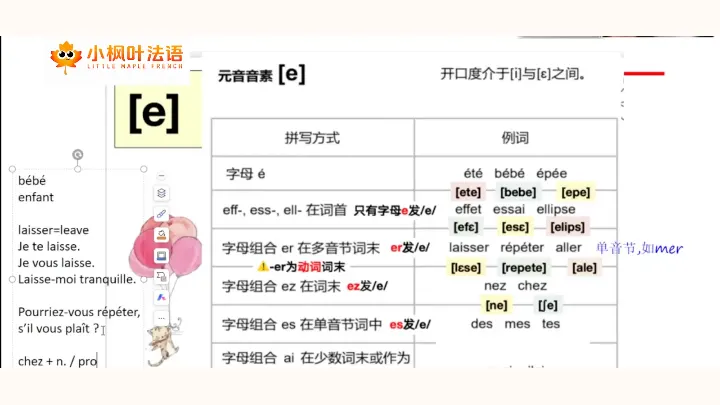
Free sample lesson · TCF Canada – Cours gratuit 02 : prononciation et lecture

Understand the question types and the methods to approach them.

Identify what to improve through classroom instruction and live Q&A.

Reinforce classroom methods with feedback and question-bank practice.
Course instructors

Structured study, timely feedback and support
The instructors cover all four TCF skills through classroom explanations, speaking corrections, and assignment feedback. They help you understand the methods, identify what to work on, and turn your study plan into daily practice.

Senior instructor and curriculum lead at Little Maple French · Examiner-level Canadian immigration French trainer
Isa holds a master’s degree from Université de Pau et des Pays de l’Adour and a Level 8 qualification for French majors. With ten years of classroom teaching experience, she teaches immigration French from beginner level through intensive B2 preparation for immigration, study, and career goals.

Senior instructor at Little Maple French
Adeline holds a Grande École master’s degree from EM Normandie and a Level 8 qualification for French majors. She has six years of teaching experience and eight years of translation experience. She is familiar with the Québec accent and teaches beginners and TCF Canada candidates across all four skills.

Senior instructor at Little Maple French
Crystal holds a master’s degree in French language and literature and a Level 8 qualification for French majors. She has taught TCF, TEF, and DELF preparation online and in person for several years. She teaches from beginner to B2, covering the four skills, grammar, and practical communication.

TCF Canada instructor · Master’s in applied foreign languages, University of Lille
Léon studied French and has studied and worked in France. He teaches French foundations and TCF and TEF preparation. His work includes teacher training, group instruction, and curriculum development, with an emphasis on applying language foundations in the exam.
Learning services

Teachers answer questions, review assignments, and help you plan your study.
Get two hours of live Q&A, with time to speak with an instructor and work on your pronunciation. Ask questions in the study group and get support throughout the course. Your instructors set daily assignments so you can track your progress.

Submit your exercises in the study group each day and receive detailed feedback from your instructor.

Build a plan around your goal, with practice, review, and focused preparation before the exam.

From a mock exam or an official result, identify your points to work on and ways to progress.

Use the platform's question bank to train you in addition to the courses.
After-class support

Get feedback on assignments and answers to questions after class.





Practice and feedback

Get feedback on your practice and know what to work on next
Study and practice

Use the platform's question bank to train you in addition to the courses.
From a mock exam or an official result, identify your points to work on and ways to progress.
Four-skill practice · Full mock exams · Unlimited score reviews
Course schedule

Find a course tailored to your level and purpose.
| Course overview | Learning content | Timing and format |
|---|---|---|
| Course overview | Travaillez les points clés du test. Renforcez les quatre compétences pour mieux vous préparer. | 3 monthsStart of course · November 30 |
| Essential techniques | Study the fundamentals of French and learn how to prepare for all four skills. | 320 course hours |
| Targeted training | Work through TCF Canada question types across all four skills during weekly practice. | 10 hours a week |
| After-class feedback | Use Q&A, assignment feedback, and a pre-exam assessment to set your priorities. | Questions and follow-upCorrection of workStudy plan and assessment before the test |
Travaillez les points clés du test. Renforcez les quatre compétences pour mieux vous préparer.
3 monthsStart of course · November 30Study the fundamentals of French and learn how to prepare for all four skills.
320 course hoursWork through TCF Canada question types across all four skills during weekly practice.
10 hours a weekUse Q&A, assignment feedback, and a pre-exam assessment to set your priorities.
Questions and follow-upCorrection of workStudy plan and assessment before the testUse the platform's question bank to train you in addition to the courses.


3 months · Start of course · November 30
320 h of techniques
Objective NCLC 7 / B2
Travaillez les points clés du test
Renforcez les quatre compétences pour mieux vous préparer
Study the fundamentals of French and learn how to prepare for all four skills.
Work through TCF Canada question types across all four skills during weekly practice.
Use the platform's question bank to train you in addition to the courses.
Use the answer explanations to check your reasoning and identify recurring mistakes.
10 hours of practice per week
Get feedback on your practice and know what to work on next
Review mistakes, note what caused them and decide what to practise next.
From a mock exam or an official result, identify your points to work on and ways to progress.
Build a plan around your goal, with practice, review, and focused preparation before the exam.
Use Q&A, assignment feedback, and a pre-exam assessment to set your priorities.
Sample reviews

French words used to intimidate me. Breaking down the sounds gave me the confidence to read them aloud.

I used to jump between resources. The course plan helped me decide what to study and practise each week.

I used to translate every sentence in my head. Starting with the idea made my speaking feel more natural.
The feedback focused on what made my writing hard to follow. Rewriting showed me where my ideas lost their thread.
I could only catch isolated words at first. Listening for the speaker’s intent helped me follow the conversation.

Unknown words used to stop me cold. Starting with the questions helped me find the parts of the text that mattered.

I liked bringing my own questions. Two everyday examples finally helped me tell those expressions apart.
I worried I would lose track of the other person. Practising follow-ups gave me something to say when I got stuck.
The feedback showed me what to fix first. On my next assignment I could check my verb tenses on my own.
I used to choose an answer as soon as I heard a number. Checking the unit and context showed me what I was missing.

Role-play showed me how short my answers were. Adding a reason helped me give a more complete response.

I used to count how many sets I finished. Going over my mistakes helped me choose what to practise next.
Getting started on an email was hard. Once I put the purpose first, adding the practical details got easier.
The teacher showed me how to shape each sound. Listening to my recordings helped me hear the difference.

I mixed up answers that sounded alike. Looking for words that narrow the meaning helped me verify my choice.

Having a plan by skill helped me choose what to work on, even when I only had half an hour in the evening.
We replayed the contrast word I had missed in listening practice. It changed which answer was right.
Revisiting the same topic in a new setting showed me which expressions I could actually use on my own.
I used to submit my writing right away. Feedback taught me to check whether I had kept the same point of view.

Review showed me where I was losing time. I got better at deciding how long to spend on the first reading question.

I worried about falling behind. Bringing a question and trying another exercise helped me see whether I understood it.
I kept getting stuck in the same place. Shorter sentences helped me get the main idea across.
Seeing different rewrites helped. I now check whether the idea is clear before reaching for harder vocabulary.

I sometimes lost track of the whole recording. Starting with what the people were talking about helped me at home too.

I sometimes guessed right without knowing why. Pointing to the supporting sentence made my choices feel more grounded.
I didn’t know what to repeat after class. Talking through my weak spots helped me choose a manageable goal for the week.
I relied on a memorized opening. Thinking about who I was writing to and why made my emails sound more natural.
Listening to myself felt strange at first. Feedback on one specific part gave me a clear place to start.

I used to check only the answer. Now I note whether I missed the words or misunderstood what they meant.

I used to translate the whole text. Class practice taught me to find the key sentences before reading closely.
I wasn’t sure whether practice was helping. Comparing two assignments showed me where my writing had become clearer.
My speaking answers wandered. Giving my point first and then an example made them easier to follow.

The mock showed me I rushed the last questions. Reviewing my timing helped me leave a little room to check my work.

Word lists didn’t come back to me in conversation. Practising expressions in specific situations made them easier to recall.
Sometimes the feedback just split one sentence in two. I learned to spot when to make that change myself.
I liked practising right after the lesson. Looking back at my mistakes helped me decide what to ask in the next class.
Frequently Asked Questions

Find a course tailored to your level and purpose.
The course is intended especially for people who begin and wish to learn French in a structured way. The level evaluation helps to clarify the study plan and the preparation time.
The course provides 320 hours of essential techniques and 10 hours of targeted practice per week. Consult an advisor to find out the schedules.
The full form does not include any additional individual courses. The intensive formula includes 5 hours and the VIP formula, 10 hours.
Check the start date shown on this page and contact an advisor to confirm the format, services, and enrolment details.